Tuesday, January 20, 2015

The Deplorable Word


Several years ago I went to college. I didn't get the chance to go as a young adult. My father passed away when I was 18, and I went to work to help support my mother. So, when my husband went back to school a few years ago to finish his degree, I went with him.

I lasted for one semester.

Not because I wasn't willing to work, or because it was too hard. I quit because my grown-up self who grew up in the most liberal place in the country, couldn't hack sitting in class with a bunch of teenagers who had never lived outside the state of Utah, who thought they knew everything about the world. I was already aware, and had made my peace with, three separate truths - the world is an unjust place, but we do what we can where we can; America is privileged and the rest of the world thinks we're arrogant (well, yeah. Duh. We have reason to be, obviously everyone else want to live here, too, or we wouldn't have the immigration problems we do!); and third, there are a wide variety of lifestyles in this world, and it's okay if they don't all agree, as long as they are courteous and respectful to each other.

When the teacher brought in a transvestite as a guest, I was done. It was too much like a freak show: "Look class, here's a wild gay person in their natural habitat. Let's take a closer look!" I may not like that particular lifestyle, but there's really no need to parade someone around in front of a bunch of sheltered teenage know-it-alls in the name of expanding their horizons.

The final straw was a class reading assignment of a book titled, "The N Word: Who Can Say It, Who Shouldn't, and Why". It may have been the most painful thing I have ever read. Not because it was badly written, or incorrect. It was the topic itself that was far too excruciating.

(For those of you lucky enough to not know what 'the N word' is -  it's a racial insult, a slang term based off the Spanish word for 'black'. This book is an in-depth study of the origin, use, and real meaning behind the word.)

In class one afternoon, a discussion took place regarding a movement to have the word removed from the dictionary. When I dared to voice that I saw no need for it to be there in the first place, I became the enemy of all enlightenment - the old fogey prude who promotes censorship akin to Big Brother. When one of the young men at the next table piped up, "well, why is the F word IN the dictionary?" to prove his point, I could honestly say I remember when it wasn't because it was considered to vulgar for decent speech.

All this makes me wonder.


In C. S. Lewis' The Magician's Nephew, a world was destroyed because one person spoke a word so heinous and awful that the fabric of the universe could not stand it's utter depravity. It was called The Deplorable Word. When the hero stepped into that world, many years later, it remained a scene of complete devastation and ruin.

"Look well on that which no eyes will ever see again," said the Queen. "Such was Charn, that great city..., the wonder of the world, perhaps of all worlds.... I have stood here when the roar of battle went up from every street and the river of Charn ran red," She paused and added, "All in one moment one woman blotted it out forever."

"Who?" said Digory in a faint voice; but he had already guessed the answer. 

"I," said the Queen. "I, Jadis, the last Queen, but the Queen of the World... I spoke the Deplorale Word. A momen later I was the only living thing beneath the sun."


I'm afraid for us. How close are we when the worst of words, with the foulest of meanings, is in every day use all over the internet, in schools, in movies, and in the song lyrics on the most popular songs on the radio.

If we allow filthy words with heinous meanings to be freely used, tolerated and considered mainstream, how long before we find our own Deplorable Word?

I may not be Martin Luther King, or Nelson Mandella, or Thomas S. Monson, but my heart is good, my will is strong, and God has given me a way with words. That talent may make a difference, even a small one, for the better.  As it says in the scriptures, those with a desire to serve are called to the work. We as LDS and Christian writers all have more than enough desire, so consider yourself called.

Fight the Deplorable Words of this world! Flood the world with words of goodness, words of value, words of worth - valiant in their meaning, uplifting to those that read them.

Monday, January 19, 2015

3 Things I Do to Help My Writing - Kathi Oram Peterson


Today's post is courtesy Kathi Oram Peterson,
author of The Forgotten Warrior, Wanted and Decieved.

Many people have asked what my daily writing routine is like. I think they are looking for some secret that will help their writing. I believe that secret is different for every person, but if it will help someone I’ll share three things that I do in general to help my writing: treat writing like a business, take productive criticism, and make time for family and church.

1)      Treat writing like a business . . .
Many would-be writers nod their heads and say, yeah I do that. But do they? Do they get up every morning, shower, put on makeup or for guys shave, and go to work? Okay some of the perks of being a writer is working in your jammies with pillow hair. I hear you. And yes, I have done that especially when I’m up against a deadline. However, I must admit my most productive days are when I show up at my keyboard ready to work. For me, that means showered, dressed, and makeup on.

Also, you need to put the hours in, you know, clock in so to speak. Working more than just eight hours a day is pretty much the norm when a writer has a deadline, edits, and promotion all at the same time on several different books. It happens.

So treat your writing like a business, because that’s what it is for a writer.

2)      Take productive criticism . . .
This is very important. Your writing will become much stronger if you learn how to take productive criticism. At first criticism feels like a personal attack, and sometimes, it can turn out that way. Some critics can become mean-spirited and have personal vendettas that have nothing to do with you or your writing, but everything do to with making themselves feel superior. Don’t listen to those people.

Find a group who has your best interests at heart, and also, who are better writers. The reason I say that is, better writers will make you grow. I’ve been part of a writers/critique group for many years. And yes, most of them are better writers than I am. Still I try my best to learn from them. There have been days when I have come home from group wondering why I wanted to become a writer because I felt pretty bruised by their critiques. But then I sleep on it, and when I feel ready, I look at their comments again and many times they are right. However, sometimes when I need something crucial to happen in my story that they disagree with, I’ll tell my group, “Help me find a way to make this happen.” And then the ideas start flowing which usually sparks a solution to my dilemma.

So learn to take productive criticism and use what your story needs.

3)      Make time for family and church . . .
I’ve always tried to make time for my family and have written with an open door policy, but then life happens, deadlines loom, and pretty soon your family starts to feel left out. I try hard to make my writing schedule coordinate with family events. It can be difficult especially when unexpected health problems crop up just before a deadline, but being able to stop writing to help someone is one of the perks of being a writer. (This is a good reason to work with a story outline and jot down notes as you write so when you have to stop, you can start again without losing too much time.) Being there for those you love is important, as is serving in your church.

I remember when I first published and was feeling a bit overwhelmed. I thought of resigning my church calling because between writing and my family there wasn’t much time left. A wise person advised me to always make time for family and service to others. It hasn’t always been easy, but it’s been well worth it. I’ve learned compassion and understanding through church service and my family, and both have helped my writing immensely.

So make time for family and church because in the long run you’ll never regret it.

There you have it, the three things I do to help my writing. They aren’t iron clad and I’m always looking for ways to improve. What do you do to help your writing?   

Saturday, January 17, 2015

Specters of the Past


By Keith N Fisher
The LDS Writer's Block Honor Roll

With the recent Blogck reboot, I took a moment to review. Of course (moment) is not the right word. In almost nine years, the LDS Writer’s Blogck has accumulated a vast library of blog posts as you might well imagine.

We are approaching nine years on the web and as the anniversary approaches, it’s good to reflect. The Blogck was the brainchild of several Authors Incognito Members and the first post was by Cindy (CL) Beck, on 21 April 2006. The link is, in this place but here is a part of that post,

You wouldn’t think it would be hard for eight writers to pick a name for a blogging group, would you?

We thought of Writers’ Block, and Authors at Large . . .

Authors with Bushy Eyebrows and Hairy Ears, or Writers That Right Butt Can’t Spel.

After spending several days pondering the options—okay, maybe it was really only hours—our editor/moderator/wiz guy (Darvel) came up with an idea. He suggested we call ourselves Seven LDS Writers and a Dog.

. . . we found out the title was a play on words from another blogging page, and our wiz guy was just poking fun.


For me, the anniversary won’t be until June. I came later, and as I rediscovered, so did many others. I had forgotten all of the bloggers who’ve graced our pages with their great words.

Many of our regulars have gone forward to reach wonderful heights. We’ve had more guest bloggers than my limited mind can remember. I included a list that I call the honor roll. As you can see in the side bar, many of the first bloggers are coming back for a guest post spot.

While reading the wisdom from the past, I realized we repeated many of the titles. Even though the subjects were different. Many times one of us posted a title and later, another posted the same title. Some of those titles came back many times.

Also, as in my case, we sometimes revisited a subject with new insight. Even though themes were repeated by our fellow bloggers, there was always a fresh approach. A lot of us were obviously inspired by our fellow laborers.

I miss the insights of so many bloggers. Some were deep others were not. The extremely funny posts by CL Beck, and James Duckett. I miss the wisdom from the heart, by Nichole Giles, and others.

I’ve missed the gospel truths by C LeRene Hall. Others came later and followed in her footsteps when the posted on Sunday. Connie also posted about her vacations and made us all wish we were there. Since there were so many regulars, I shouldn’t try to list all the exploits. Some bloggers came, shared jewels of wisdom, and left like a shadow.

Some of us did book reviews and interviews. Others quoted conference presenters. I think one of those incurred the wrath of conference promoters when they published the notes verbatim, but I was never sure.

I don’t remember who replaced whom, but it really doesn’t matter. Everyone played a part so it makes no difference how long any writer was on the Blogck. 

The guest bloggers always had welcome insights. I am a better writer because of the advice shared on these pages, and I an honored to have been part of it. All in all, I think it has been worthwhile. Many a reader posted comments, thanking us for helping them on their journey.

As I said in the re-launch, when we started, we weren’t alone posting about writing, but we were in an exclusive minority. With blogs like Six LDS Writer’s and A Frog, and LDS Publisher, we were in good company. My old person’s memory won’t allow me to list them all, but some blogs were about book reviews, and some were national market heroes. Like the others did for us, I hope we helped show other writers how to blog.

In those days, the blog was new and necessary in order to promote your writing, but as all fads do, the blog as a promotion tool, went by the wayside. Many, perhaps, most writers now have a blog. With social media and other pursuits, blogs go unread, and I suppose that’s as it should be.

When I pour through our archives, I see how writers, (myself included), improved their craft. That is perhaps the best lesson you could glean from our pages. Take a minute or many hours and read those archives. You might find treasures.

When you meet a former Blogck writer at writer’s conferences and book launches, take a moment to thank them. Like the pioneers of LDS fiction, they are the specters of the past. They were paying it forward, trying to help others in the writer’s quest.

In a coming day, I too, will be gone from these pages. With Wendy’s return, and her fervor, the Blogck will continue. I will move on, but until then, I will keep offering my tainted wisdom.

Good luck with your writing—see you next week.


Thursday, January 15, 2015

Finding Your Balance

By C. Michelle Jefferies

I'm an author, I am also a student of yoga.

In my crazy world, the hour I spend on my mat is my sanity. You'll probably see a lot of parallels drawn between the two from me in the future.

This post is a prime example.

Balance is essential in yoga just as it is in life. Especially when the mass majority of authors do not write as a daytime job. I have seven kids, five of them still at home, I have a high needs four year old that I call destructo boy if that gives you any clue to what my day looks like. I have a husband that works out of state, and a house that is supposed to be on the market to sell. I'm also driven by the need to be creative in more than just needing to write. I dye fabric and clothes, bind books, do leather work, make jewelry and run a manuscript consult business.

Balance is essential in Yoga so I don't fall on my face, balance in life is essential so I don't burn out.

How do you achieve balance?

Scheduling, prioritizing, switching between projects, moderation in time spent and devotion to projects, maintain your non writers life and most important, self care. You can't write all day long and then expect the rest of your life to just not fall apart in the meantime.

Make an effort to achieve balance in your life, and you will be rewarded in the quality of the moments. 

Namaste

Wednesday, January 14, 2015

WRITING PROMPT WEDNESDAY


"Now you've done it!" 

"Hey, this was all your idea, pal!"

Tuesday, January 13, 2015

Fictionalizing History

I didn't think I could do it. It was hard enough to write my personal history the first time, I really didn't think I'd survive a second go-round.

There's a certain chunk of time in my past that holds a really good story. It is important to me, and to my family. Everyone who hears one of us talk about it inevitably tells us we should write it into a book.

So I did. 

Hemingway once said all you have to do to write is sit down at your typewriter and open a vein. He wasn't kidding. It was almost that painful, more in some ways. My husband had to step back a bit. I told him to, because he's one of those guys that wants to fix or kill everything that makes me sad and I needed room to let that sadness manifest. My sister told me I was going to have a nervous breakdown, and my mother accused me of being on a witch hunt.  It was almost as uncomfortable for my family as it was for me to write this traumatic, dramatic event.

I wanted, no needed, to catch every detail. I didn't want to leave anything out because I felt that anything omitted would be a lie. No one would believe this was a true story if every single iota of detail was in place. They wouldn't understand the depth of it unless they had all the history, all the back story, all the reasons and all the rhymes.

Then I gave it to two separate published authors whose opinion I value highly. And I waited. I waited like a woman in the waiting room of a hospital, waiting for someone they love to come out of life or death surgery.

And then it came back to me. The diagnosis wasn't good. It had fallen far short. Somewhere in those facts and details I had lost the thrust, lost the drama. Both of my critiquers were very positive - it had potential.  It could be really great - if I fictionalized it, turned it into a novel instead of a memoir.

I went through every stage of grief over that verdict.

Denial. What did they know, anyway? Anger - gut wrenching fury. Bargaining - decided the project would have to die, because I was not going to fictionalize it. I'd put it in a drawer and leave it there forever before I'd cheapen it by making it fiction. Depression - all that I had gone through meant nothing. My dream of putting it out there for others to read would never come to fruition.

..and finally, acceptance.

The Acceptance started with a phone call. I mentioned, in passing, to my family what had been said to me about fictionalizing the story. To my absolute surprise, they jumped all over that idea. It was the best idea ever, in their opinion. I about fell off my chair.

When I picked myself up, something changed. Suddenly, if my family was okay with it, then it was surely no sin to fictionalize the story. It wouldn't be untruth, it would be based on truth. And if that was the case, then it didn't matter if every little detail, every word, every movement was actual - the spirit of the story would remain intact, even if the parts were rearranged.

So this is the crossroads at which I currently stand.


I went through the photo album of pictures I had compiled specifically for the original version, and pulled out a selection of pictures. I pulled out only those that embody my characters, the setting, the general feel of what I want to portray in the novel. Then I could, literally and figuratively, close the book on the past and begin anew.


I bought myself colored index cards, one for each viewpoint. Since I was no longer telling the absolute truth, I no longer have only to rely on my own point of view - suddenly I have four POV's to work between, and whole wide worlds of possibility have opened up. The two blues are my parents, pink is my sister, and yellow is me. Green are actual events, the few white cards you see are things that are made up from whole cloth. There aren't very many of those, the vast majority of the story is actually factual.

I no longer have to worry that the main dramatic point was not, chronologically, the climax of the plot. Rearrange a few cards, and the thrust of the drama returns.

I used to worry that fictionalizing would be a burden, a weight I was not strong enough to carry. But I'm finding as I work farther into this, it's actually quite liberating.


Follow Weston's personal writing journey at  westonelliott.blogspot.com

Monday, January 12, 2015

7 Tips to Help Your Readers Find YOU - Karlene Browning


When you publish your first book, you aren’t just putting a story out there. You are launching a brand and an identity that will travel with you over the course of your writing career. If you do it right, it will help lead readers to you in a natural and organic fashion. If you do it wrong, it will confuse readers and they will get lost on their way to finding you.

While each of these tips has their own set of pros and cons, whys and wherefores, rules and reasons to break the rules, this quick tip list will help your readers find YOU when they’re looking for a good book to read.  

1. Pick your name.
As your brand, your name needs to be unique enough to differentiate you from other authors with similar names. Do a Google search. If you happen to share a name with another author or a famous person, consider adding an initial, using a middle name, or using a less common pen name.

When a reader finds an author they like, they will Google the name on the cover of the book. You want them to find you online wherever you are. Whether you’re Jane Doe, Jane S. Doe, or Jane Smith Doe, that is your brand and you need to use it on every book cover and on all your online author accounts.

2. Claim your name.
Before your name is set in stone, make sure you can get it as a .com, a Google ID and gmail address, and on the social media platforms you prefer. You want identifiable and consistent name branding across as many platforms as possible.

Here again, Google is your friend. If the .com is taken, adjust your name until you find a variation you’re comfortable with, then grab the URL and social media account names as fast as you can. Even if you aren’t quite ready to publish, get them NOW!

3. Avoid too many pen names.
There are several valid and legitimate reasons for having multiple pen names. Just know that for each name, you start all over from scratch. You’ll need a website, social media accounts, and emails for each one. Is it worth it?

In most cases, differentiating genres is not a good reason to use a pen name. Readers usually find you through the genre they like best. If they like you, they will give your other genres a try. A good website will let them know what to expect in each genre.

The only time it truly serves you to use a second name is if one area of writing would offend established readers or damage your reputation. For example, if you write both Middle Grade and soft porn, use a pen name. Or if you write academic papers on quantum physics and Regency Romance, use a pen name or your academic peers will snicker behind your back.

4. Have a website.
You need an online presence with a permanent URL and an easily searchable website or blog.  (Facebook and Twitter are add-ons, not adequate author sites.)  Unless you know you are only going to write one book, your URL should be your name (see tips 1 & 2), not your book title. Not only will a website help people find you, but it gives them something to link to when they want to share your books with their friends.

While you can start with a free site, I recommend a hosted domain as soon as possible. Free sites can change policies or close down at any time. At the very least, point that URL from tip #2 to your free blog, and use that URL on business cards and book bios.

5. Post your books on your site.
You would think this is one of those “duh” statements but you would be surprised at how many author sites and blogs I go to that have absolutely no mention of their books. At all.

Somewhere on your site you need a tab or button that says BOOKS. A simple list of each book and series in suggested reading order is the minimum. Ideally, each book would have its own page with a large cover image, title, release date, publisher, ISBN #, genre category, description, and links to where the books can be purchased. Keep this info current!

6. You need an About Page.
Readers want to know who you are, not just what you write. A good website always has an About page with a photo, a short professional bio that bloggers and news media can use, and perhaps a longer bio just for fun. It also needs to include links to all of your active social media sites and a way to contact you.

Your photo should be a nice image that will clearly identify you everywhere. Use this same image on your Amazon, GoodReads, Facebook, Twitter, and all profiles where you are acting as your author identity. Even if you’re camera shy, you can come up with something.

This isn’t to say you can’t change it up sometimes, or use more casual photos on social media. The goal is to have your readers recognize you, no matter where they find you.

7. Email
You MUST have a way for people to contact you. I can’t tell you how many times I’ve tried to reach an author for an interview, presentation, or tell them they’ve won an award, only to discover there is no way to contact them.

As to the email address itself, no self-respecting author would use missfancypants@whatever.com. If at all possible, it should be your name as it appears on your books, JaneDoe@whatever.com.


Karlene Browning has worked in all aspects of the publishing industry since 1981. She currently freelances through LibrisPro.com (www.librispro.com ). She wrote the popular LDS Publisher blog (www.ldspublisher.com) for seven years. Now she runs NewLDSFiction.com (www.newldsfiction.com) where she spotlights new fiction releases by LDS authors.


Sunday, January 11, 2015

COMMENT DRAWING WINNER

And our winner is.....


*drumroll here........*

Karlene!

(And this has NOTHING to do with the fact that she is posting here tomorrow!  My ten year old son pulled the name from the hat!)

Karlene wins a 1 pound Hershey bar!

Thanks for all the comments!


Saturday, January 10, 2015

References


By Keith N Fisher
Now that we’re up and running again, and promoting the Blogck with a renewed push, I’m intimidated. Before, when I was almost alone, I didn’t worry about my writing. Who was going to read it, right? Also, have you seen the list of guest bloggers we have lined up for the next couple of months?

Not only do we have editors and authors. (Did you see Jeff Savage in there?), but I thought it would be fun to bring back the original writers on the Blogck. The response has been wonderful, but as I said, I’m intimidated. These guys are my heroes and I will be sharing the page with them. Still, I want to thank them for agreeing to share their wisdom with us.

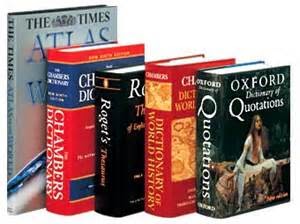
Recently, I implemented an idea that has helped my writing and I wanted to share. How many of you write with a dictionary or other reference books at the ready? These helpful resources are invaluable in getting the sentences right.

While free writing, many will wait until they edit to check the dictionary, thesaurus, baby name lists, etc. When you are OCD, however, it drives you crazy until you look it up. I try to use red XXXX’s then come back later and get on the Internet, but spell check and other “Helpful” technologies make me stop and fix it.

I have a link on my computer desktop that goes straight to Webster’s online. Then, of course there is Wikipedia. Many of you know, however, most of my writing is done away from an office. In places where the Internet is not available the red XXXX’s come out.

Also, in the past; little snippets that need to change to make the story better, the ideas for plot twists I might want to explore, bits of information that came to mind, were put into a new document and saved into the project file. Doing this was helpful, because writing something down always helps me remember, but sometimes it was forgotten. Who checks their notes every time they sit down to write?

Recently, I wrote about my experience at a writer’s retreat. While at the event, I acquired three reference books that have changed my writing. I keep wondering how I ever lived without them. Of course I’m talking about the emotion, positive trait, and negative trait, thesaurus’ (Thesauri).

The action lists in those books have helped me show rather than tell in ways I only dreamed about before. The problem I had, though, came when I couldn’t bring the books with me to write. My solution occurred on Christmas morning while I waited for my family to get out of bed. I purchased the PDF version and put it on my desktop. Now when I find myself telling and not showing, I open the thesaurus and find an action that shows what I’m trying to say. It goes with me, anywhere I happen to be writing.

There are PDF versions of many references that I plan to put on my desktop in the future. Also, a page can be saved from the Internet that will open on your computer even with the WIFI turned off. I’m developing a whole library of instant references that go with me.

As for the info snippets, my new, (old) tool is sticky notes, both literal and digital. I heard a story once, about a Franklin Planner executive walking into another man’s office and watching the man work. the man had placed sticky notes everywhere and scraps of paper were scattered all over the office. Yes, sticky notes can get out of hand, but here’s what happened to me:

I was editing at my desk, during lunch, at work the other day. I suddenly remembered an important plot point I’d left out. I didn’t want to leave what I was working on to go back and fix it. I grabbed a sticky note from my desk, wrote down the thought, stuck it on my keyboard and went on.

The note stayed there for two days. Every time I opened my laptop, It reminded me. I kept moving it out of the way of the keys I needed to use. Finally, I implemented the changes, but I had been thinking about the best way to write it, so I’d made it perfect.

In the interim, I was writing in a coffee shop when a plot point sprang to mind. I didn’t have any sticky notes. Suddenly, I remembered the digital version that comes with Windows. I opened one up and made my note. Now it reminds me, every time I turn on my computer. Yes, I could end up like the man in the story, but the secret is to deal with the notes, then delete them.     

Good luck with your writing—see you next week. 

Thursday, January 08, 2015

The ART of Writing

By C. Michelle Jefferies

It's a discussion I've had many times with authors of all levels.

What does it take to produce a publishable work of writing?

You see, writing, or being an author is within the realm of the arts. That same realm of music, theater, visual arts, dance, and/or any other creative endeavor. Art is created to entertain, show and express. Great art makes us think and feel emotions. Bad art repels us and creates no resonance between the viewer and the creator. The same goes for books.

There is a problem in the current mind set around publishing. Many new authors think that they can write a draft and run the most basic spell check and be done with their book. That minimal effort is passable. If JK Rowling did it, so can they. If this mindset doesn't work in any other art form, why is it okay in writing?

No elementary school kid is going to produce gallery worthy pictures with paper and crayons. No first year piano student is going to play at Carnegie Hall. A just graduated high school drama student is going to land a Broadway lead.

Why?

Time.

They haven't invested the time, practice, and work that it takes to become a professional in their realm of art. At least not yet. Writing well takes time and practice. Learning character, pacing, plot and all of the other subtleties of writing a good novel requires hours of application.

I don't want this to discourage you, at all. It's totally possible to have a successful career as a published author. Whether you go Indie or Traditional.

Just think of it this way, if you want to be successful as an author like Michael Jordan was in basketball, you need to do what he did. Practice every day, for hours, and learn your art/game. Write millions of words, rewrite, revise, and edit those millions of words. learn everything you can about the publishing world and then when you feel like the story might be worthy of something, send it to people who will make you revise, edit, and rework it to make it even better.

I promise you, when a writers reputation depends on satisfying the reader and recommendations from readers, you don't want to tape a crayon on construction paper rendition of your pet cat on the wall next to the Mona Lisa.

Find your magic


Wednesday, January 07, 2015

WRITING PROMPT WEDNESDAY

Every Wednesday for the year 2015, we'll be posting a writing prompt. These aren't meant to be anything ground-breaking, or best-seller. they are meant to give your creativity a jump-start!  Use them to free-write, use them as a starting point, or wrap them in your latest work in progress if they serve your purpose. Take them, use them, fly, be free!

To start out, here is my all-time favorite. The comments after the original prompt show the power a simple writers prompt can have!


Tuesday, January 06, 2015

100 Years Wiser

A hundred years ago or so, back in  2006, I was a spankin' new writer eagerly devouring every word, written or otherwise, I could get on the subject.  On one particular blog, not too different from this one, a published author posted a picture of herself in a hammock overlooking an astoundingly beautiful beach in Costa Rica. On her lap, in the hammock, was a laptop and she was blissfully writing away, unaware her husband was snapping the picture. The caption said something along the lines of her finding time to write even on vacation. The whole photo was a beautiful sentiment.

...and it torqued me off!

So I got on my own blog - a rather new invention to me at the time - and penned my thoughts. They were as follows.

"Manufacturing Time

There's a saying, an old standby, that we've all heard.

'You make time for what you want to do.'

I beg to differ!

Sometimes, that simply is not true. As anyone who has ever worked 12 hour rotating shifts in a mine, pulled green-chain for 14 hours in a lumber mill, or worked three jobs to support a family of four on minimum wage. I'm sure they'll agree with me. That old cliche is not always accurate. Not that I mean to play the devil's advocate, but there is one simple fact that cannot be overlooked.

You cannot manufacture time.

All you get is twenty-four hours, seven days a week. No more, no less. Within that time frame lies everything that must be accomplished to live day to day. No matter how hard you try, there will always be something demanding your time and attention. And, unless you are one of the blessed few, the most crucial item on your list of priorities will probably not ever be your writing.

I'd like to thank Willard Boyd Gardner for bursting my little bubble on this particular subject. As a friend and i were rhapsodizing about the day we could quit our respective jobs and write all we wanted to, he gave us some words of wisdom.

'You've got t realize,' he said, 'it's going to be a while before you can make a living by wriitng. You're not going to be able to just quit your job right away. Probably not for years.'

Hardly te unbridled optimism I was hoping for, but still a well-placed reality adjustment.

Face it, Bill's right.

You make time for what must be done; a career with a reliable paycheck, time for you family, food on the table and roof overhead. It's the reality of living. In the words of John Lennon, 'Life is what happens to you while you're busy making other plans.'  In other words, no one should ever feel guilty for putting survival higher on the 'must do' list than writing.

However, there is a light at the end of the tunnel, and it's a bright one. Unclaimed moments occur all over in between the pressing matters of everyday living, and they are time that we can borrow for what we want; to write! 

As an example, do I absolutely need a hot lunch, when that few minutes waiting for the microwave in the break room could be spent writing? This is why I scribbled down the notes for this article while scarfing down cold macaroni and cheese. Two hours of my eleven hour workdays are spent in the car, time with nothing but me and Ford on the open road, where I can talk to myself, planning whole pages of dialogue, and no one there to think I've lost my mind for doing it.

So, despair not O Writer with a Full Time Job!

Just learn to like cold macaroni and cheese."

...

In the days and months following this post, I got to know the author that was the subject of that photograph that started all this. She is not, I'm happy to report, the spoilt so&so that I made my mind up she was from that picture. She is a hard working, witty, and intelligent author who I have come to respect at the utmost. And I can honestly say I was, and still am, thrilled to see her career fly the way it has with her latest, very successful series of books!

However As I re-read this, after finding it tucked away in a closet in a notebook I'd all but forgotten existed, I came to realize one thing...

I was right.

Nothing's changed, except maybe my level of torque, and those words ring as true nine years later. The big difference lies with me.

As a writer I've mellowed as I've gleaned experience. I can't write feverishly every moment of every day, and that's okay.  We don't, as writers, need to feel guilty when other things come along that take away from our blessed writing time. It's okay.  Having, or even liking, to do other things does not brand you forever as disloyal to the craft!  For me, it was something of a hard learned lesson. It doesn't have to be for you, you really can take my word for it.

Write feverishly when you can, learn every chance you get from others who are willing to share their wisdom through conferences, blogs, and websites, but most of all enjoy your journey to writerhood!

Monday, January 05, 2015

Rewind, Reboot, Restore

By Keith N Fisher

Welcome. It’s time for the re-launch of the LDS Writer’s Blogck. As the oldest blogger on the Blogck, I was given the honor of writing the inaugural post. It’s really not that I’m old, (heaven forbid), just that I’m still posting, while many of my fellow laborers have come and gone. Praise to Wendy for coming back and taking the reins.

Back when the Blogck began, posting about writing wasn’t new, but we were in semi-exclusive company. Whether we were any good or not, we had readership, now everybody writes about writing, and most of the readers don’t make the blog circuit like they did before.

It’s a new day, however. With the return of old friends there is new resolve. Wendy came back, Michele is back from her break, and we are motivated. Wendy gave the Blogck a new look, and she has big plans. It’s been like a shot in the arm for me. As part of those plans we will have scheduled famous guest bloggers. Starting next Tuesday, the weekly drawing of commenting readers begins. We plan to run original comic strips, writing prompts and fun, fun, fun.

Writing is one of the greatest creative endeavors we have, but it ain’t easy. We all struggle with the craft so, our goal is to motivate and restore you. We offer advice and camaraderie to you, our fellow laborers.

So, as we re-boot, and move ahead, we look forward to offering our insight. We hope you will find great things on these pages. Most of all, our goal is to motivate and restore you. Writing is one of the greatest ways to create, but it ain’t easy.

As you peruse these hallowed bits of data, please take time to consult the archives. Read what has gone before, and remember those who were once here. If you notice an improvement in the writing from then until now, good—Take a lesson, because our craft is like that. Practice begets improvement, and what better practice than doing?

At this writing, we have three full time writers: Weston Elliott on Tuesday, C Michele Jefferies on Thursday, and I will be posting on Saturday. Guests on Monday, and writing prompts on Wednesday. Perhaps we’ll sponsor a retreat or two. There are myriad ideas we are working on. All, to tempt you to bookmark our page.

To the new readers we welcome you. To those returning, we missed you. Let us know how we can help you. Like the dictionary or a thesaurus, let us be a resource.

Good luck in your writing—see you Saturday.

PS as with all the posts, leave a comment and you will be entered in the drawing. The first prize is a one-pound block of Hershey’s Chocolate.

3.....2.......1........

annnnnnndddd......


WE'RE BACK, BABY!!