Saturday, October 22, 2011

Re-Posting From the Archive

By Keith N Fisher

I’m going camping and I won’t be here on Saturday. Also, things are hectic right now, so I decided to re-post an article from 2006. I’m not sure if this will appear on time, but if not I’ll be late. I did a little editing because I’m a better writer now. I hope you like it. I’ll see you when I come down from the mountain.


Writers Block at 9,000 Feet

By Keith Fisher

I couldn’t bring my computer. Well, I guess I could’ve but I’m one of those who didn’t know you should remove the battery from a laptop while on house current so it only lasts about 50 minutes. Because of my daily writing habit I wondered if I would go crazy without my electronic crutch.

In an attempt at appeasement, I brought a wire bound notebook. I figured I could at least, make notes of the ideas I might have. I had a priesthood lesson to plan anyway.

My brother had a different kind of hunting permit than I did, but I didn’t want him to go alone, so I went camping. As it turned out, my dad went too, but he stayed in his trailer with my brother. So, I had a lot of alone time in mine. During the day, I got to shoot the bull with my dad. We solved the problems of the world, and my brother went hunting.

Have you ever tried to concentrate on a plot while chatting with someone? I put down my notebook and talked. I didn’t get my writing done.

After we ate the Dutch oven food I cooked, and we said good night I went into the trailer and opened my notebook. Nothing happened. I tried to make notes for my lesson but I couldn’t keep my mind on it.

I realized if I had a generator, I could’ve brought my computer. At least I could Edit, or watch a DVD. What do you do when you’re camped at 9,000 feet during your writing time and nothing comes to mind? Did I mention I was alone in a camp trailer? No distractions, what a great set up. I was having the weekend that most writers can only dream about, but my mind wasn’t co-operating. What would you do? I gave up.

I finally decided to go to bed, thinking I would at least get some sleep. Well, that was the plan, anyway. I began to obsess over a dry throat and dust in the furnace. I didn't want to wake up with a cold. Perhaps a little hot chocolate, I thought.

When my hot drink was ready, I sat down and thumbed through previous notes made in my notebook. It got me thinking about the characters in a different book than the one I was working on. Suddenly, and without forethought, I was writing again. I still missed my computer screen, but the notebook was working fine.

Three cups of hot chocolate and four hours later, I decided that I’d better go to bed. I was happy when my head hit the pillow. I forgot about the dust in the furnace while I dreamed about plot lines.

I spent the rest of the weekend writing the story I never intended to work on. I learned to be flexible with my writing time. I also learned that even though it sounds crazy, characters are like children. If you pay attention to one, the other will get jealous and try to take center stage. If I listen, perhaps my writing will turn out better.

I’d forgotten the joy of quietly putting ink on paper. It was nice to reacquaint myself. Although, reading what I wrote, is another matter.


As I said, this blog was written in October of 2006. That was three laptop batteries ago. I now have a cigarette lighter cord for my computer, and I take a notebook.

There are several projects percolating in my brain in case of writer’s block. I’m also writing a cookbook, so my camp kitchen is packed and ready. I’ll see you when I get back.

Good luck with your writing—see you next week.


Thursday, October 20, 2011

Moving Forward

by Cheri Chesley

Thank you to everyone who gave me input about my problem last week. It really helped. Thanks in part to the encouragement, I've been able to figure out a solid way to rewrite the story. It will take time, but I've already written a scene. That's a good step, right?

All writers experience growth and change in their writing. It's part of why you almost always hear a well known author lament how "terrible" their first novel is, even if it is published. I don't know a single person who can't give me the title or description of one awful published novel they're come across. They're out there: usually they're the ones that make us ask, "If this garbage can get published, why can't I?"

This is where finding joy in the journey comes in. Not everything we write will be awesome, but it will help us learn, if we're open to teaching.

Saturday, October 15, 2011

Killing the Independents

By Keith N Fisher

I watched a documentary on Public Television the other day. It was called, Paperback Dreams and it lamented the demise of two San Francisco Bay area book stores. Cody’s Books, in Berkely, California, and Kepler’s across the bay in Menlo Park.

The narrator talked about their beginnings and how they became Mecca for the free thinkers and counter-culture radicals of the sixties. Cody’s even served as a medical first-aid station in nineteen-sixty eight during a Telegraph Avenue anti war protest. The police & National Guard used tear gas and clubs to disperse the crowd. So, a group of former army medics who’d been in Vietnam, offered to help those who were injured.

Many famous people, writers and musicians cut their proverbial teeth in those stores. Joan Baez talked about the time she spent in Kepler’s and what she learned. Even the Grateful Dead, hung out there. Roy Kepler, the founder, used to complain that they always played the same song, and stole the ashtrays. Over the years, there have been many writers who read their work at Cody’s and Keplers and left a signed photograph for the wall. Those places were filled with literary tradition.

The show explored the different ways those two stores have struggled to survive. The economy will always be a problem for book sales, but the real threat started when reading fell victim to visual media. Book sales dropped, but the trade paperback, with the cheaper price, saved the business and gave those two stores their start. Then, came the threat from big box stores, like Walmart, Costco, and Target. They are still cutting into the market, but online, discount booksellers have devastated the industry. The latest attacks on independent bookstores have come from e-books and print on demand and it’s killing bookstores.

As writers, we selfishly plot and scheme. We look to our bottom line to find the best way to get our work published. We embrace the brave new world in our attempt to market our careers and sell books. After all, that is the point, right? Technology is the wave of the future, isn’t it? I wonder how many of us consider what the brave new world is doing to the independent bookstore.

We search for places to launch our books and moan the loss of independents, but forget to patronize those stores during the rest of the year. We buy each other’s books online and as e-books. Who can afford to do otherwise?

During the closing of one of the stores in the documentary, one of the customers claimed she used to come into the store three times a week. In a private response, the owner of the store wondered, if that were true, where were the sales? It’s the bottom line that closed the store.

With the routine closing of independents and now, national chains, like Borders, we are losing a way of life. The exchange of ideas and independent thought of the sixties are gone. Meeting at Borders for a cappuccino and a quiet place to write is going away, too. Did you ever walk into a small bookstore and breathe in the aroma of freshly printed books? You won’t get that at Amazon. Well, the warehouse workers might, but thumbing the pages and fingering the spine is impossible with e-books.

With the loss of independent booksellers, our world is changing.

I’ve lamented the coming of E-books and print on demand before. I certainly don’t want to harp on something that is inevitable. I just wish we could hold-on to the better parts of our society.

Good luck with your writing—see you next week.

Friday, October 14, 2011

Friends in High Places

Well, perhaps that's not the right title, but it's what came to mind.  I had dinner with a couple of women last night that all have the same birth month as me.  October.  It's a great month to have a birthday in - I know I'm prejudice that way, but I happen to love October.  Anyway - one of the women is a young mother who is trying to write and get back to writing in a consistent way.  She hasn't written for 10 years, and feels like she's way behind in the curve.

She remembered talking to me and how I'm a writer and thought I might be interested to know she had just joined a writers group and thought I might like to join with her.  I thanked her for thinking about me, but told her I'd been a member of a critique group for several years, and yes, it's a wonderful thing.  Isn't it funny how I wrote about critique groups last week?  I think it's interesting how these things seem to come circling around.

I also think it's admirable that she's realized she needs outside input to get her writing going.  That is pretty smart, something it took several years for me to pick up on.  So, I think she's way ahead of the curve, and her writing can only improve with effort.  She said that her first meeting made her feel very behind, as everyone else's writing was wonderful and her's was awful.  I doubt there was that big of a difference, but I also remember how one of the newer members of my group went home and bawled because she'd had such a hard time listening to our suggestions.

Having someone critique your baby is hard.  Not only is it a part of you out for the world to see, but you want so desperately for someone to like it, to validate that you're a writer.  When they say sure, but you need to fix this and that, it's like saying "yeah, we can save you but it will cost your leg and part of your arm.  Can you work with that?"

I salute those who have realized that they need help and want advise.  It takes guts to realize you can't do it on your own, no matter how good you.  How many of you have gone out there and found that group after last week??  Roll call!!

Thursday, October 13, 2011

The Best Laid Plans

by Cheri Chesley

A few years ago, I wrote a story for my niece as a birthday present. I've always been happy with it, in memory, and loved the concept of the story. How fun would it be, I thought, with Halloween approaching, to release this story as an ebook since it's a fun little ghost story/mystery. So I emailed the girl who'd been working on the cover for me, and set a release date for tomorrow--October 14, 2011.

Then I realized I need to authenticate the story, set in Scotland, by doing some research into the area and culture. Not all facts will make it into the story, I reasoned, but I needed to have a clear picture in my mind in order to project a clear image on paper.

At last, I sat down to edit the story and get it ready to publish.

And realized it's terrible.

Don't get me wrong, the plot is solid. It's actually a really cool mystery set over 500 years. But the writing, what I remembered as being so good at the time, is really awful.

First of all, there's almost no showing. It's all tell, all the time. Secondly it's incredibly trite. The way the characters talk to one another is forced and unnatural. I'm embarrassed to think there was a time when I thought it was good.

I know I'm not the only person this has happened to, and I'm sure you all have stories to share. While I'm trying to figure out if this one is worth salvaging, I'd like to hear from you. I definitely could use a little boost. :)

Saturday, October 08, 2011

Looking Literary

By Keith N Fisher

I attended the Book Academy this week. It’s a one-day conference put on by the UVU Continuing Education Department. There were four breakout sessions, a panel of book reviewers, book signings, and Dan Wells was the keynote speaker. Breakfast was great and lunch was delicious. I’ve attended for three years now, and I’m still impressed.

Anyway, I sat in the ballroom getting ready to eat and someone joined me. We talked about writing and whether I was published yet or not. The man told me I look like an author. When I asked why, the subject of my beard and long hair came up.

Hmm. I didn’t know I was unkempt in order to look literary. I thought it was because I work at night and haven’t been able to connect with my barber. I had been self-conscious since I would be talking with Kirk Shaw from Covenant. I didn’t want to make a poor impression since I’m waiting to hear from them about one of my manuscripts. Now, whenever I look at myself in the mirror, I see Hemmingway or Vonnegut. I might have something here. Do you think I could be a famous author just by looking like Walt Whitman?

No, I write LDS fiction so, don’t think it’ll work. Maybe, it’s national market time? Maybe, it’s easier to just get my haircut and beard trimmed.

I learned some things at the conference and met some new friends. It’s surprising that more people don’t attend. Many of those I see at Storymakers would also love this one. Mark it on your calendar for next year. Jessica Day George will be the keynote speaker.

Good luck with your writing—see you next week.

Friday, October 07, 2011

Diversity Can be Good

by G.Parker

My thoughts today are on critique groups.  I hope you're not groaning...it's not like I ONLY talk about critique groups...I have to admit I do talk about them a lot though.  The reason they came to mind this week is we got a couple of newbies to our group this past month.  It always makes us nervous when new people come on board because you never know how it's going to work out.  Our group is pretty comfortable with each other and what we're writing now, and it takes time to get the newbies acquainted with our little quirks and habits.

One of our newbies wasn't sure she wanted to join.  She liked the group and all, but she's not a fiction writer, and most of us are.  She decided to go ahead and give it a try.  It will be interesting to read her stuff and try and critique for her.  The other one is going to fit right in, I think, though she's thinking she's already to submit and it will be interesting to see how the group likes her work.

But it was the comments of one of the newbies that made me think about diversity.  She stated that she's worried how we'll view her work because we all write fiction and it's different.  I don't see that as a negative.  I think the more diverse a group is, the better the viewpoints.  We know we aren't all going to agree with everything everyone writes.  We are fortunate to have two males in our group, and the rest of us are glad they're there -- they let us know if we're being unrealistic with regards to things male.  They let us know if things are too mushy, sappy or -- heaven forbid -- romantic.  Grin.

A well rounded critique group is going to give the most honest feedback on a book than anything else.  Sure, you are likely writing for a target audience, but wouldn't it be nice if someone who's looking for something new to read picked up your book and liked it?  Isn't that what we're kind of looking for anyway?

So in your search for the perfect critique group, remember to look at the diversity of the group.  Do they all write romance?  Suspense?  Mystery?  Non-fiction?  Are they all women?  Are they open minded about reading something different?

Diversity has become sort of a swear word by political parties and government watchdogs.  Saying we want diversity is like saying there can't be a majority of anything.  In writing groups or critique groups, that is not the same meaning.  Diversity helps with open mindedness and growth in skill.  I believe most writers are open to diverse thoughts and opinions.  It's one of the bylaws of our critique group -- while everyone gives their opinion on your work, it doesn't mean you have to follow it -- they are only suggestions after all and it's your story.

If you haven't found a critique group yet, you really need to get on it.  It will only help you get better.  Faster.

Thursday, October 06, 2011

Are You a Visionary?

by Cheri Chesley

With the passing of Steve Jobs yesterday, many people will be looking inward today. It's human nature to reflect on your own life when confronted with the limits of mortality. He was described, among other things, as a visionary. He made great strides forward in his industry, introducing products and technology that most of us hadn't even considered.

Not every likes a visionary. They most often come across people who don't understand their methods, or thought processes, and dismiss them as insignificant. Worse, they can be persecuted for that they believe, or what they are trying to accomplish.

Mr. Jobs was lucky enough (and by lucky I mean hard-working and determined enough) to find success in his field. My field, as a writer, is considerably different. Am I a visionary writer?

I have a driving need to do things my way. That doesn't mean it's "my way or the highway" because I do listen to other people's opinions and ideas, but I adapt what works for me to fit my mold and ideals. I've stretched my comfort zone so much it's barely recognizable, and I still find myself doing things I wouldn't have dreamed of speaking up about a few years ago. The thing is, I've found my path--what I truly love--and there is no going back.

But what about all those rules about writing and publishing? you ask. One person I heard once said that you need to know the rules so that you understand what you are doing when you break them. And working within certain rules doesn't make you less of a visionary. Mr. Jobs had to work within some rules to achieve his successes. He couldn't, for instance, violate the rules of logic or physics to create.

I submit that using the rules is not the same as being bound to them. Especially with writing and publishing, since the rules are subject to change at a moment's notice.

I'll be frank. I don't really consider myself a visionary writer. I have goals, and dreams, and ideals, but I don't know if that makes me a visionary. Do I have the drive to pursue my dream no matter what? Yes. Is it my true path? Yes. Is it what I love. YES.

Are you a visionary?

Saturday, October 01, 2011

Do It Yourself, Or . . .

By Keith N Fisher

When I started writing, I noticed a few ads in trade magazines for what we called vanity presses. There was even one company named Vanity Press. They offered writers an opportunity to see their book in print. There was a minimum order. So, it cost a small fortune. It was, however, a way of getting your work out, even after rejection by a publishing house.

Also, there was subsidized publishing which gave an author the prestige of having a publisher at a price. You could see your book printed if you paid a percentage of the cost. Book sales with a vanity press were entirely dependent upon the author. Subsidized publishers offered some service, but the author shouldered most of the sales burden.

Many fiction authors who went those routes never quite recovered from the stigma. Some rose from it and became superstars in their own right. The difference was in the quality of writing. Most of the poorly written books still inhabit shelves in the libraries of family members and relatives. A lot, are taking up space in the writer’s garage. Some get passed around at yard sales, year after year.

Now we live in a print on demand world. E-books have invaded the market and new books are coming from everywhere. Many, first-time authors are doing it themselves. It’s cheaper and easier then ever before. Sales still depend on the author, but the stigma of vanity seems to have disappeared.

Does do it yourself sound like a win/win situation? Personally, I like the idea of having a publisher. If for nothing else, it says my work is good enough, and there are down sides to self-publishing.

In the LDS market specifically, getting a contract from a publishing house hasn’t changed much. I need to submit a clean manuscript. If there are too many problems, it won’t be accepted. The days of mediocrity, however, are gone. Writers have raised the bar. The old stereotypes have fallen. Readers are taking notice.

The beauties of being accepted by a publisher are myriad. Most important is the editor assigned to your project. In the interest of delivering the best possible product, the editor finds errors for you to fix. There is no editor in self-publishing.

Many writers slave over rewrites until they’re sure the manuscript is perfect, but they don’t have the resource of good friends in the business. Friends who could read through and catch errors before its published.

I’ve been blessed with the opportunity to do blog reviews. I get to read some of those self-published books, along with those from publishing houses. Many of the self-published ones could’ve benefited from the services of an editor.

I think that many writers finish a story and hurry to publish. They’re probably sick of reading through the manuscript so, they rush to get it out there. Some times they forget about that spot they were going to fix but never did. The book goes to press. The flaws are still there. The writer gets a bad reputation, and the market suffers.

In the past, because of a mediocre product, many readers wouldn’t read LDS market books. Now, because of impatience, some of the self-published books on the market are returning us to those days.

I don’t mean to imply that all self-published books are badly written. In fact, most of them are fine. Even those who could use an editor are good. They just need a little more polish. A line and content editor would help immensely.

The lesson is clear. Slow down and make sure its perfect before you publish. Look at logistics. Don’t have your character see something that doesn’t exist in the place you have written them into. Use a good friend or hire an editor. At the very least, it gives you someone to blame for that typo on page forty three. You know the one that makes you look like a four-year old author?

I have a friend who can open a book to the middle and tell if it was self-published without looking at the cover, or reading a word. The word wrap and layout are important. Don’t get sucked into thinking it doesn’t matter, because the point is quality, right?

Keep in mind you have to sell your book. There are marketers you can hire, but it still takes work and you won’t have a publisher to help you. If, after all, you sell a few books, wouldn’t piece of mind be preferable to always remembering the mistakes you made? Don’t give your customers a reason to pass you over when its a choice between your second book or . . .

As for me, I want a publisher. I think I have a lot to offer. I think we can work well together. Did I mention I cook in Dutch ovens? Just think of the great company Christmas parties in the publishing house. Hint. Hint.

Anyway, good luck with your writing—see you next week.

Friday, September 30, 2011

Show Me State of Being

by G.Parker

A couple of weeks ago I was able to participate in a writing retreat.  It was one night, up in a fabulous cabin away from pretty much any distraction you could have.  It was great.  I got loads of writing done.  I remember sitting there as we were typing away on our laptops that it would be a good place to use in a story some time. It's not every day you get to enjoy the peace and quiet of a log cabin that looks more like a ski lodge.  The logs were thick and the windows were large, allowing a great view of the fields and mountains.  The rustic feel was kind of off set by the hat on the moose, but you still got the impression it was a home away from home.  I loved the slate floor, and the large fireplaces.  It reminded me of my sister's cabin in Fish Lake, which is much of the same design and decor.

As I thought about it today, I realized it was part of the whole 'tell me' or 'show me' of writing.  Most writers will tell you all about something, description of a location, item or person.  A real good writer will show you with words in such a way as you feel you can easily see it in your mind, you can picture it and feel like you are there.  I think it's something all of us strive for.

That is something we try to encourage in my critique group.  Especially one writer who is very adamant about it.  He'll say "that wasn't in the book we read," meaning, despite what the author thought they were conveying, that was not what the reader picked up.  It's not easy to get it down, and we usually use too many words when a few will do.  The whole idea is to find descriptive words that aren't too flowery, or over blown, so to speak.  You want to be real, down to earth and have the words easy to read.

I know I don't quite have it down, sometimes it's easier than others.  There are some authors that are excellent, and reading their work will help yours.  Who is your favorite author with description?  I'd like to know.

Thursday, September 29, 2011

Stretching the Creative Muscle

by Cheri Chesley

A few years ago, I got it in my head to write a short story as a gift to one of my nieces. The story flowed out beautifully and I was able to get it to her just in time for her birthday.

Full of inspiration, I thought how great it would be if I could write a birthday story for each of my nieces that year. And, if I did that, wouldn't it be great to include my daughters too?

The problem is that I have ten nieces, two daughters and a stepdaughter. And, let's be honest, not all of them love to read. I wrote two stories for two nieces that year.

They're good stories, fun stories. One--geared for a 9 yr old mystery lover--was a light hearted mystery set in Paris about a girl and can crime solving duo. The other--aimed at a 15 yr old--was a darker, more gothic themed murder mystery involving a wedding, terrifying dreams and betrayal, set in Scotland.

One is around 17,000 words and the other is 9,800 words. I've been thinking they'd make great ebooks. And what better time to launch a mystery/suspense than around Halloween? Just ask my friend, ELIZABETH. :) I can't possibly compete with her in levels of awesomeness (her book is getting RAVE reviews already), but I'm still going to launch The Price of Love in the days before Halloween, when everyone is looking for a good thrill.

It's going to be fun!

Saturday, September 24, 2011

The Brick Joke


By Keith N Fisher

Many years ago, while driving a produce truck, I heard an obscure joke I never forgot. Subsequently, I’ve told it many times with varied results. It’s not very funny, but it’s cute. I’m not sure who wrote it, but here it goes. Be sure to read all the way through, because I’m going to make a point about writing.

Once, there was a man named George. He wanted to build a brick barbecue. He made plans, and calculated exactly how many bricks he would need. Then, he marched into the home improvement store and asked for seventy-one bricks. The clerk told him that like doughnuts, the bricks he wanted were packaged in dozens.

“But I don’t want seventy-two bricks,” George said. “What would I do with the other brick?”

The clerk responded with, “I don’t know. Perhaps you could use it as a door stop?”

George shook his head and went to the mercantile. He was told the same thing but since they were a wholesale business, he would only be able to get them by the pallet.

“How many would that be?” George asked.

“Ninety-six. The counter man said.

George did the math in his head “Then I would have twenty-four bricks left over.”

“Yeah but you would get the wholesale price.”

George decided to go to the brick plant.

“That’s correct. There are ninety six bricks on each pallet.” The yardman said. “But we discount each pallet after the first one. The more you buy the cheaper it is.”

“So I can get a really good deal if I want to build five barbecues. But that would leave me with fifteen bricks. Can’t you just break up a pallet?”

The yardman shook his head.

Finally, George relented, went back to the home improvement store, and purchased seventy-two bricks. He had a wonderful time building his barbecue and sure enough, he had one brick left over. George stood there looking around, wondering what to do with the brick. Suddenly his blood pressure shot through the roof and do you know what he did with that brick?

?????????

He tossed into the air as hard as he could.

Okay, Okay, I told you it wasn’t very funny.

On that same afternoon in the produce truck, my friend told me another joke,

Back in the days of designated smoking areas on commercial airplanes, a woman named Jenny tried to get a non-smoking ticket of a commuter flight. She was told there were no more seats in that section and if she wanted to get on the plane she would need to sit with the smokers.

“I can’t do that,” Jenny complained. I can’t stand it, besides my dog is allergic.”

“Well, if you want, we can check the dog as baggage,” the ticket agent said.

“Not Fifi. She’s like a family member.” Jenny said.

“I’m sorry ma’am. You could wait until the next flight.”

“When would that be?” Jenny asked.

“Tomorrow morning.”

Jenny paced the ticket area and finally decided on a plan. It was a short flight and perhaps she could appeal to the kindness of her seatmates. She purchased the ticket.

Boarding early, Jenny found her seat on the aisle, over the wing and sat down with Fifi in her lap. Soon, a burley businessman with an unlit cigar in his mouth, sat next to her. Jenny introduced herself and Fifi.

“My name is Dave,” he said.

Contrary to Jenny’s nature, she chatted with Dave about their reasons for being on the plane and when the plane started down the runway, she assumed his sympathies were with her.

Soon they were in the air and some of the passengers began to light up. Jenny complained to Dave about her aversion and Fifi’s allergies. Dave raised a lighter to his cigar, glanced at her, and put his cigar away.

After a while, Dave fidgeted, and reached for his cigar. Jenny sighed.

“Don’t worry. Since this plane isn’t pressurized, I can open this window. I’ll blow my smoke outside,” Dave said.

Jenny relented, knowing Dave was actually trying to work with her, but the window blew Dave’s smoke right toward her. She coughed and Dave snuffed out the cigar.

Still more time passed and Dave lit his cigar again. This time, Fifi started sneezing. When Jenny complained, Dave said, “Look. I love this cigar about as much as you love that dog. I’ll make a deal with you.” Dave pointed out the window. “I’ll toss my cigar out the window if you toss your dog.”

“Don’t be stupid,” Jenny said. “I can’t do that to Fifi.”

Dave nodded his head in self-righteousness.

Before long Fifi was gasping for breath and Jenny had an idea. “We could switch seats.”

Dave huffed and climbed over her to stand in the aisle. Jenny slid across and took a deep breath of fresh air. She put Fifi on the ledge and encouraged her to breathe. “Thank you, Dave,” Jenny turned to him and said. Seconds later, the unthinkable happened. Fifi climbed out the window.

Jenny was inconsolable. Dave reached over and dropped his cigar out the window in a symbolic gesture but Jenny didn’t care. How would she ever be able to go on without Fifi?

After a while, the plane had grown quiet except for Jenny’s sobs. All the smokers had extinguished their cigarettes and Jenny glanced out the window toward the wing. Do you know what she saw?

???????

Was the Dog sitting on the wing, smoking the cigar?

?????

Nope. With wide-eyed amazement, Jenny looked and saw the brick . . .


If I hadn’t been driving a produce truck between Salt Lake and Provo, I don’t think I would’ve enjoyed this two-part joke. I was sequestered and bored, besides, my friend told it much, better than I can. The trick is in the timing and acting oblivious to the fact the first part is stupid, while keeping their attention in the second part. Never the less, the responses when I tell it, surprise me sometimes.

Recently, in critique group we addressed the problem of a book that reads like two different stories in the same story. There is the first part, which doesn’t appear to relate the second part, and seems like an entirely different book. In the end, however, both parts come together.

A suggestion was made to publish it as a two-part story. Other than connectivity, it’s a great piece of writing, but I’m a little unsure about the two-part idea. As writers we often write sequels but if we are good writers each story will be stand alone, not dependent on the other.

In a two-part the writer is obligated to make the first part exciting enough to carry the reader into the second book. Then if the second part lets them down, the reader will never forget that. When I tell the brick joke, it causes serious doubts about my joke telling abilities.

There is also the inherent danger of adding fill to a manuscript in order get the word count up for two books.

I think it would work if the parts were equally interesting. Each part needs a complete arc that provides closure for the reader. Also the first part needs a few teasers that lead the reader into the second part, then makes the reader glad he took the time to read.

If the second part of the brick joke had been funny enough, it would’ve been worth the time it took to get there. Make all your writing worth the time to get to the end.

Please forgive my stupid joke and consider, if I had posted this blog in two parts, would you have read it all? Good luck with your writing—see you next week.

Friday, September 23, 2011

Reviewing is Difficult...

by G.Parker

I volunteer to review books simply because I like to read and I really like free books.  ;)  However, agreeing to review them is the difficult part.  What if you don't like the book?  What if it stinks?  What if it's the greatest thing since peanutbutter and it makes your own writing look bad?  You'll want to throw in the towel and never write another word again.

Well...so I've got two books to read and review.  I've finished one, and now at least I have more time to do the next one.  Publishing is a low budget thing, ya know?  So you got to work with what you've got, and if people are slow mailing the book, there's not much you can do.

The first book was nothing like I thought it would be.  Unfortunately, my first thought was that the author should have been part of a critique group, they would have helped her with some small things.  Otherwise, I enjoyed it and thought it was a good story.

Have you ever done a review before?  Have you wondered how best to talk about it?  Do you give the whole story line away?  Or do you just give enough to wet the appetite and encourage the readers?  What if you can't stand it?

I often wondered what the response would be if I wrote that the author should never have published... grin.  Fortunately, that wasn't the case with this book, or any of the books I've reviewed.  They were all worth reading, if only once.

Thursday, September 22, 2011

The Indie Path

by Cheri Chesley

More and more of my friends are embarking on the Indie path. For those uncertain, Indie means independently published, or self published. KAREN HOOVER recently launched the second book in her fantasy series. And my friends CHRISTINE and ALI have their books coming later this year. Mind you, this is just a sampling of the amazing books coming from my wealth of author friends. I'm so excited for each of them.

At least in my little circle, there has been a growing trend of Indie publishing. I recently wrote about my own options on my BLOG because it has been weighing heavily on my mind.

Truly, there are lots of ways to publish our works. It's great to have options, but I find myself carefully weighing the pros and cons of each option against the book in hopes of determining that particular book's best path. And while I recognize making money as a writer would be amazing, my goal is to share my stories with others. If I were writing to be rich I'd write stuff I knew would sell. Instead I'm guided by my heart, and the heart is a terrible financier. :)

For instance, I have a book that is part of a series partially published. If I get turned down by my current publisher, not many other publishers would be willing to step into a series in the middle. I'd most likely self publish that one.

However, I've recently had a story idea that I believe is strong and powerful and could have a lot of draw. I'd probably seek traditional publication for that one.

There's something to be said for the cliche "Don't put all your eggs in one basket." I like that I can traditionally publish and self publish, if it means more people have the opportunity to come across my works. I appreciate what I've learned--and continue to learn--about the writing craft. It makes a better quality book no matter which publishing direction I choose.

Wednesday, September 21, 2011

DREAMS

by C. LaRene Hall


Most everyone has dreams – some come true and others go by the wayside. Sometimes we work to make the dream happen. I honestly believe that writers have to strive harder than most to make sure their dreams occur.

Some of us are lucky and have a special someone that spurs us on to success. I lost my special someone earlier this year, and it’s taken a while to get past that and get on with life without that encouragement. He always remembered the day I was supposed to post my blog, and I’ve missed him asking me if I remembered to post that day. He wasn’t a reader, but he constantly supported my writing and encouraged me to attend writing conferences.

Remembering this makes me want to do better. He would be disappointed if he knew I’ve been so neglectful. Last week I finally had a breakthrough and for the first time in six months, I actually sat and wrote for hours. I’m finally going to finish the books I’ve began.

Next week when I post I’m going to tell you about the great writer’s workshop (Roundup) I attended last weekend. My computer at home crashed and I’m not able to pull up my notes this week, but next week things should be back to normal.

Saturday, September 17, 2011

Reflection

By Keith N Fisher

I went to the doctor the other day. No big deal you might say, but believe it or not, I haven’t seen a doctor in thirteen years. Before that, it was probably twelve. Not that I have anything against them, I just have other things to spend money on.

Hearing the diagnosis, with more test results to follow, made me reflect on what I’ve done with my life. Things have changed a lot since the picture at the right was taken. That’s me on the left, being manhandled into the picture by my brother.

I spent my childhood in an almost Norman Rockwell type of existence. My friends and I could pack a lunch in the morning, be gone all day and never run into another house. There were farms and ranches where we lived and if we went far enough, there was Utah Lake.

We were free to let our imaginations run wild and we did. There were sand dunes, and orchards. There were abandoned houses we believed were haunted. Yes I had a great childhood.

As a teenager in the late sixties and seventies, life became complicated. Turbulent times called for difficult choices. Many of us were confused. We didn’t want to die in Southeast Asia, but we learned patriotism in the Boy Scouts. We built rope bridges and pole towers, went camping and let our hair grow. I barely missed having to register for the draft, but I have friends and relatives who served.

Later, after high school, I worked in the construction trades and wasted a lot of time without any direction. Then, through a series of events I found God. I returned to my roots and went on a mission at twenty-six years old.

I married my high school sweetheart after, and went about making a living. I worked on the degree I’d started before, but Architecture had lost its charm. Life has a way of making you change your plans.

I’ve made a living in several different occupations, grabbing experience along the way. Now, I use that experience plotting stories. I expect to live another fifty years, putting my adventures to good use.

Thanks for letting me ramble. Good luck with your writing—see you next week.


Thursday, September 15, 2011

The New Idea

by Cheri Chesley

Imagine you have cultivated a brand new story idea into a full-fledged novel synopsis. We authors love that feeling; something fresh and new to build and develop. Ah, the bliss. There's nothing quite like writing the story for the first time.

I'm there right now. I have a new idea that, in the idea phase, I'm calling The City of Light. It's a terrible title, really, but that's part of the growth and development of the idea. The real title will come later. You can read about the story HERE on my author blog.

After the story is developed and that first draft written, we delve into rewrites and edits. I'm also there. 40 out of 271 pages done, few changes made so far, but there will be bigger changes that will alter my editing time. Soon, though, perhaps next month, The Tyrant King will finally **actually** be ready for my editor. I made a mistake with the previous draft and sent it to people I know love the story, without considering how brutal they may or may not be to the plot. They weren't, and, in my haste, I sent it off to the editor only to get it back with some kind suggestions that it just wasn't ready yet. She was right, of course. I've since developed a more complicated subplot, added clues to solve the mysteries within the story, and caught some glaring holes in the story arc that needed attention.

Each phase of idea-to-novel development is important. Granted, I'm not a fan of the editing phase, but I think that's because it takes so long. I've never been a patient person. Maybe this is Heavenly Father's way of developing that particular trait in me. :)

So, what's your newest idea? I've shared mine. Please share yours with me.

Saturday, September 10, 2011

BOOK REVIEW

Wow, I’ve been absent for a long time. Sorry – I’ll try to do better in the future.

Tristi Pinkston asked me to do a book review today for a book, “All That Was Promised” by Vickie Hall. Many of you know I love historical fiction novels. This book was no exception. I do have to tell everyone that I had a hard time putting the book down. There was lots of action, and suspense, and even love stories. The story was well told and I’m anxious to read other books by Vickie Hall.

The story starts out with Richard Kenyon, a young Methodist minister listening to a Mormon missionary, Ben Lachlan. Ben shares his unusual message with Richard which leaves him questioning his life work. Richard’s wife Leah is not so anxious to have her life turned upside down.

I have visited Cardiff before and was excited to see those pictures in my mind brought back to life. The descriptions of the locality were so familiar. Vickie also was able to bring each of her characters to life. I felt like many of them could have been my friends.

I was amazed at the many violent persecution stories that Vicki shared in this story. The saints in Wales certainly suffered a lot for their new found religion. The story certainly kept me on the edge of my seat. The many twists and turns in every chapter kept me wanting to turn pages. I was actually disappointed when the story was finished because I wanted more.

If you enjoy historical fiction, I would certainly encourage you to read this book. I am displaying the purchase link. http://www.amazon.com/All-That-Promised-Vickie-Hall/dp/1599554798/ref=sr_1_1?ie=UTF8&qid=1315243013&sr=8-1

Good People

By Keith N Fisher

Along with James Dashner writing an article in the current issue of Writer’s Digest, I crossed a threshold. He was one of the published authors I met at the first writer’s conference I attended. I feel vested in his success because I knew him before the Thirteenth Reality.

While on a family campout, I impressed one of my relatives with the fact I’d met Brandon Sanderson. Of course meeting him was a big deal, but he’s just a normal guy who happens to write popular fiction.

Everyone in my critique group is published. So, when someone talks about one of those authors and the books they’ve written, It’s fun for me to remember their books coming to critique group. I don’t try to impress anyone, however, most people don’t really believe I know those authors anyway.

Have you ever heard the statement, it’s not what you know, but who you know? I have a friend who went to a very popular national conference. The event is geared toward fans, but authors, publishers, and agents have a place, too. My friend met some powerful people in the business who are now helping with her career.

It’s a good feeling to attend a writer’s event and be recognized by famous people. To have them call me by name and ask about my work is precious. In a business with so much inherent competition, that seems strange, but the industry is full of nice people. Perhaps, the pay it forward or the give back theories are partly responsible. I think, however, it’s a personality trait. Whatever inspires people to write also makes them kind.

Yes there have been exceptions, but you will find them in every rule.

As I look back on my experiences with writers, I’m humbled by the acts of selflessness. I’ve seen anonymous helping hands extended toward struggling writers. I’ve seen people taken under wings and careers built on an introduction. I’m blessed to know so many nice people and I hope to measure up.

Good luck with your writing—see you next week.

Friday, September 09, 2011

Vehicles

by G.Parker

As I was watching a DVD the other night, it occurred to me that writers have a variety of vehicles with which to express themselves.

I know that's not a new thought, and one that you are probably fully aware of, but I think it's interesting.  You see, we have print, video, music, whatever the human condition, we have a chance to voice our opinion.  To champion a cause.  To debate the validity of a thought or action.  Where we have voice, we have vehicle, and some writers dive in with both feet.

It was part of the reason I started a blog.  A blog is something I can control, can put my own voice to and gets me out into the world.  I feel that even though it's not a popular blog or read by millions, it's still my chance to have my voice heard.

While this is a good thing, sometimes it drives me crazy when I'm subjected to someone else's passion.  Take the movie we'd watched, Wall-e.  On the surface it is a cute, romantic, sweet story of two robots from totally different worlds coming together.  But under that story is the whole bit about a large corporation taking over the planet, global warming and garbage out of control.  Over hundreds of years.  It bugs me EVERY time.  I think, right, that stuff would all still be here then??  Not a chance, the jungle would have taken over a long, long time ago, my friend, despite what you'd like the common person to believe.  Or kids, for that matter, since the movie was made for children viewing.

See, that's where the vehicle begins other things, like debates and opinions and editorials...you get the idea.  It's what fuels the economy, or the magazine, newspaper or radio business.  Opinions, passions, and differences of opinion are what keep us communicating and finding the vehicle we want to express ourselves.

Which vehicle is your favorite way to express yourself?

Thursday, September 08, 2011

by Cheri Chesley

By the time you read this, I will have moved already. :) It's also my birthday (last week, the 1st). lol.

(Image courtesy of happynews.com)

Looking back, in my life I've lived in 3 states, 7 cities and 7 wards. In 15 yrs of marriage, we've moved 8 times. This month makes number 9. sigh.

You'd think I'd have developed a system by now to make packing and moving easier. I haven't. We're collecting boxes and accepting help wherever we can, and I still feel overwhelmed by it all.

I seriously hate moving.

But, packing to move is a lot like the process of editing out certain scenes, dialogue or segments of our stories. As I sit there with a box and a pile of things to put in it, I go through that pile and get rid of everything that isn't necessary.

And, if it really is difficult, I ask myself if we had a fire and I lost everything, would I miss this? I know that sounds dramatic, but I have to ask myself similar questions about things I cut from my stories.

It's not secret, when I published The Peasant Queen, my publisher asked me to cut my 440 page manuscript down to less than 300 pages. At times, I had to be brutal. It was not easy. In some cases, it was downright painful. I saved everything I cut, certain I'd revisit the segments and maybe add them back in later in the series.

I've never looked at that file since.

Similarly, there are items I've left behind in our many moves and never missed them.

I still hate packing. ;)

There's a point where you have to ask yourself if this thing you want to keep is absolutely essential. When we downsized from our 6 bedroom house across town to this little apartment, I asked myself that question a lot. Now, facing a cross-country move, I'm asking myself again. What is so important I have to take it 1200 miles? Obviously, my DI furniture can stay. It'd be easier and cheaper to replace it when we get there than to pay for the bigger truck to haul it all out there.

Editing is so like that. What do you want to carry? What is absolutely essential to the story, that the reader cannot do without? What can be replaced--written in a better, more concise way later?

When it comes to stuff, there are many things I'll gleefully throw away. Writing is much harder.

Wednesday, September 07, 2011

Blog Book TOUR: UPGRADER

By Darvell Hunt


If you've ever wished your DNA would change to give you superpowers to fight inter-dimensional monsters, so you could prevent the Earth from getting destroyed, then UPGRADER: RE-ENGINEERED by Terry Tibke is the right book for you!

While this book seems to be targeting the YA market with characters in high school, the writing, artwork, and book-length seem to target the middle-grade audience. In any case, younger readers who like fantastical stories in fast-paced out-of-this-world settings should enjoy reading about hero Dylan and his DNA-changing adventures. See what he does about an inter-dimensional rift that has opened to Earth, which could unleash untold evils upon our world!

You can grab a copy of Terry's new book on Amazon in paperback or Kindle version, or you check out his blog at: http://www.terrytibke.com/blog/.

Saturday, September 03, 2011

Writing is an Enigma—Writing is Life’s Blood


By Keith N Fisher

Each day I work, sleep, and write a little. Some days, I write a lot, but not without paying a toll. I work at night so when I sleep, I feel guilty about being lazy. There is so much daylight out there that I’m wasting. I wake after two hours, force myself to go back to sleep, and never get enough.

When I write, I think of all the yard work, home repairs, and honey-do’s I’m neglecting. It feels great when I’m in the zone and writing, but what about my lawn?

Currently, The Hillside is at the publisher, waiting for a decision. The sequel is written and I’m going through the edits. Eternal Tapestries, My Brother’s Keeper, and The Trophy are all in the do-over stage. I’m writing the last chapters of Star Crossed, and I’m working on my cookbook.

The Latter has been a daunting task for me. Cooking is easy and I have dozen’s of recipes, both written, and in my head. The problem is formatting. As the director of many cooking competitions I’m no stranger to compiling recipe books, but a cookbook should be different. It’s hard, but I’m making progress.

In the midst of all of this, I wrote an outline for a national market book that’s been floating in my head. I wish I could write full time, but then again . . .

Have you seen the movie, 2012? In it there’s a scene when a man, (an author), takes his children camping in Yellowstone and there are strange things going on. The scene starts when its night, the children are going to bed and he’s on the Internet trying to figure it out. The daughter says, “Dad, you said you wouldn’t work on your book.”

He puts his laptop aside and says, “I’m not, I’m doing something else.”

That says it all. As writers we take our work with us, everywhere. My daughter said something similar to me once. She didn’t want to compete for my time while camping. So, now, I hide my laptop and get up at three a.m. so I can write and still give my time to her. Of course, now, she’s a teenager and doesn’t get out of bed before noon, so maybe I should sleep in.

Yes, as the title of this post says, writing can be a mysterious. What drives a person to finish one book while writing and drafting others? What keeps us going in the face of rejection? I don’t know but after all this time, I can’t not, write. It has become a part of who I am. Writing is life’s blood if you will.

So, I wake up after two hours of sleep, write the scene I’ve been thinking about, and try catch brief moments of slumber while feeling guilty about letting my garden go to weeds.
Good luck with your writing—see you next week.

Friday, September 02, 2011

Hummingbirds and other Rambles


by G.Parker

Okay - I had several ideas for this blog, but none of them got put into an organized thought pattern.  I've been reading some of my older blogs and I think I used to be a lot funnier.  I don't know, but I think the swiss cheese factor has lessened the humor ability in my brain.  You remember how I mentioned I have swiss cheese for a brain?  Lot's of holes up there...

Anyway, I was glancing through Facebook the other day and my sister-in-law had posted "Hummingbirds can't walk."  I thought that was rather random.  Okay, so they can't walk.  I guess they don't need to, they can fly faster than anything else can walk, and when they aren't flying, they're sitting on the feeders, eating.  We are the proud owners of two Humingbird feeders, and it is the funnest thing to watch them come eat.  Sometimes they remain flying, sometimes they stop and  drink.  They're legs are awfully tiny, but I would think they could still walk...We have one that comes rather regularly and we've named him White Tail.  My sister was telling me that they were telling them to take down their hummingbird feeder at their cabin in Fish Lake.  What?  Apparently they were claiming it was a detriment to the ecology or something like that.  They also said they probably wouldn't be enforcing it...sigh.  Yet another illogical move on the part of government.

So, besides Hummingbirds, my other thought was regarding disappointment.  We've talked about voice several times on this blog, and how readers come to expect a certain voice from a writer.  I checked out a book the other day because of a blog I've read that I thought would be entertaining.  Instead it comes across to me as rather self serving and self centered.  Hmmm.  I guess blogs are different than books.  (You think?)  The way you write in a blog is not going to come across the same way as something written in a book.  Fortunately (I guess) for the writer of this book, it sold enough that apparently everyone else thought it was great, so it's not an issue for them.  However, I'm probably not going to finish it.  I have limited reading time as it is, why waste it on something that is disappointing?

Well, such is my rambling thoughts for the day.  Hope you have a great weekend and get lots of writing done on your day off!  

Saturday, August 27, 2011

Getting the Story Straight

By Keith N Fisher

I’m sixty-five thousand words into one of my stories and I just found out my protagonist collects crystal bells. No big deal except in one scene, she drops her purse on the floor and breaks a bell her daughter in law gave to her. I had to rewrite the first parts and establish the fact that she is a collector, hence the reason for the gift.

Don’t you just love it when you have to go back and get the story straight? In fiction, adding facts in the middle of the story can be confusing. In Non-fiction, being wrong can cost your credibility.

Lately, I’ve been reading a non-fiction book that deals with Utah history and I’m a little put out by some of the author’s interpretations. I’ve read many of the first hand accounts and I’m finding discrepancies.

It makes me wonder how many inaccurate facts have been written into the record. I’m sure you’ve heard that history is often written by the victorious. If that’s true, then can we trust it?

Thinking forward makes me wonder about fifty years from now. How will today’s news be reported in the history books? I sometimes doubt it will be accurate since I often hear reporters twist facts to make the evening news entertaining. Because of that guidepost I have to ask, is it okay to sacrifice correctness to make a book interesting?

Have you ever been in a room full of family members and listened to a story that is different from the way you remember it? Just because someone was there doesn’t mean they haven’t embellished the facts. The standard who, what, when, and where gets cut from the narrative.

My mother loves to talk about when her kids were young. I cringe when she talks about me because she often gets the story wrong. When I try to correct the facts my brother asks, what does it matter? Just let her tell her story. Would it matter to you?

In the book I’m reading, the author writes about the supposed Hiram Beebe connection to the Sundance Kid. He tells the story as if it were fact. Now, many of us believe Sundance was living in Fountain Green, Utah and went to Mount Pleasant for a drink in the bar. He killed a deputy who was trying to prevent him from driving drunk and died in the Utah State Prison.

The problem with telling that story is that it was never proven. If I forget to go back and establish my character as a collector, it will confuse my readers. If an author includes the Hiram Beebe speculation in non-fiction, a footnote is imperative. Getting the story straight is essential. Also, if there are several versions of a story the author needs to say that.

Often, non-fiction becomes a source of reference that textbooks are derived from. If the source is flawed, then so are the facts. People tend to believe everything in print.

I used to shake my head during church meetings when people stood at the pulpit and quoted from The Work and The Glory, by Gerald N Lund. Some of those people believed it was all historical fact, even though the author took great pains to separate the fact from the fiction. Some people actually believed the Steeds were a real family who lived during those times.

That’s a great testament to the author’s character building ability, but it also emphasizes the need to be accurate in non-fiction.

Whether we write fiction or non-fiction, because readers want to believe, authors often become an authority on a subject simply because they wrote about it in their fiction. The News commentator, Paul Harvey used to talk about the time he was called upon to report about something that happened in England simply because he’d just returned from there. Later, he claimed his information was gleaned from an AP Teletype, but he was the authority. Can you imagine what would’ve happened if the AP reporter had given the wrong information?

Good luck with your writing—see you next week.

Friday, August 26, 2011

Off the Cuff

by G.Parker

Many times we end up doing things spur of the moment.  Whether it's having to stand in for someone teaching a lesson at the last minute, hurrying to feed hungry kids when working a long day or procrastinating a deadline, I'm sure you've all experienced it.

Well, that's me today.  I neglected my blog this week in favor, or rather, as a result of going back to work.  Schools back in, that means so am I.  Sigh.  I've given it some thought, but I never came up with anything solid.  So, you get my thoughts as they come, regardless as to the writing world, or rather, because of it.

At my critique group Wednesday, a comment was made about one of the writer's work.  It was said that the writing had improved, the story was great, but it seemed too professional, too...worked.  I thought that was an interesting thought, and apparently it has come up in my brain as a thought for today.  Isn't that handy?

When rewriting or reworking our stories, that's usually not something that you'd think about.  Going over something too much is not generally a problem.  (At least not mine, since I rarely have that amount of time!)  When you are doing the editing and revising of your work, think about the tone, the voice and the plot.  Is what you're doing going to strengthen?  Is it going to benefit the general plot?  Or is it something that is fine on it's own or just needs to be removed?  Honestly, sometimes things just need to be taken out and dumped, even though we love them and they are perhaps our favorite scene.

So, my short thought for this Friday is to consider your writing and the editing/rewriting process.  You don't want to over do, and yet you do want to get it into tip-top shape for that perfect agent that's going to want to sell it to the world.  Just sayin'.  

Thursday, August 25, 2011

Bad Hair Lessons

by Cheri Chesley

(this is not a recent picture--her hair is much longer now)
A few weeks ago, I spent over $30 on hair repair items for my daughter. She spent an extra couple of weeks in OK with her Papa, and swam almost every day--and ran out of conditioner and didn't tell him she needed more. So she spent most of that time without conditioning her hair.

It came back the texture of straw. Seriously.

Because she's been working so hard to grow her hair out, I opted for helping her fix her hair rather than going and getting it cut short. Although, you have to admit, she looks pretty darn good in an A-line. See?

As I spend day after day obsessing over when to give her the next conditioning treatment, having her wash and condition her hair with products I don't usually buy for myself, I'm reminded of the editing process. I know--I'm such a WRITER! lol

See, many of us--and I'm one of them--want to go through our manuscript 2 or 3 times before pronouncing it perfect! Done! As good as we can make it! But, like these conditioning treatments my daughter and I are doing, it can take a dozen or more work-throughs before we're really done with a project.

I'm slowly learning this. I submitted my sequel to Cedar Fort, happy that it was as good as I can make it, until I heard back from them with suggestions that I make some changes and resubmit before they'll consider offering me a contract. See, they knew it wasn't up to par. And, looking back, I know it too--now. :) After letting the project sit for a month, I realized many holes I'd missed and lots of ways to make the story deeper, more compelling and overall more interesting. I'd gotten the bare bones of the story down, but I needed to embellish.

That has to wait until the summer is over. And, now, after we move.

I want to be a better writer than I am. This will take patience. Like my daughter's hair will also take patience, time and effort to get it back to a semblance of normal. I'm still learning; I'll probably always be learning. But that isn't really a bad thing.

Saturday, August 20, 2011

Fame!

By Keith N Fisher


I'm late! I had to write this in a hurry. Please excuse my writng mistakes.


Last week, I was at the August Authorama and what a good day it was. I think they sold dozens of books. Of course, I made dump cobblers in Dutch ovens. We got a few compliments, but I was more gratified to see my cousin drive up with my aunt in tow. They’d seen the flyer and came to purchase my book. I had to tell them told them I was just the cook at that event, then I steered them to the books of my friends.

Understandably, the experience made me wish I was launching my own book and I reflected on my journey. I started writing several years ago, without much success. I got serious about it in 2005 and I’ve been learning the craft ever since.

Early on, without really knowing why, I supported others in their quest, while following my own. I’ve been pleased to see many of my friends, find publishing success.

The other day, while attending a church meeting, one of our friends handed us a flyer announcing a book signing for her daughter’s book. It was a children’s book telling the story her grandfather told for many years.

Of course, I admit a little jealousy. I want to see my own work in print. But then I remembered the lyrics to the theme song for both a movie and TV show:

I'm gonna live forever. I'm gonna learn how to fly.
High!
I feel it coming together. People will see me and cry.
Fame!
I'm gonna make it to heaven—Light up the sky like a flame
Fame!
I'm gonna live forever. Baby remember my name.

I realized that everyone deserves the attention of their peers. In one way, or another, people crave it. Poets have written about it. Even mass murderers seek it. Mass murderers you ask?

Have you noticed that almost every time there is an incident like the Columbine High School massacre, the perpetrators leave notes talking about their feelings of anonymity? In their mind they’ve worked out a scenario that will make them famous. People will remember their name forever.

In large part they are right. Who can forget the name, Ted Bundy? It’s tragic to see any of God’s children come to that point.

Do you remember show and tell? Once a week while in grammar school we were encouraged to bring an item of interest and tell the class why it was cool. The activity taught many valuable lessons about public speaking and participation, but it gave us far greater rewards. You see, each of us were given or moment to be famous.

I mentioned above, that I didn’t really know why seeing my friends succeed was gratifying for me. I’ve written about it before, but I realized a few years ago, that one of the reasons I was given a desire to write was for others. Not just the people who will read my books, but those I network with. Perhaps my calling in life is to help others get their moment.

Back in 2000, I had my moment. My wife and I were competing in the Worlds Championship Dutch oven cook off. A local TV personality wanted to interview a few of us, and I was one of them. I was on television showing my cooking talents and I was famous for fifteen minutes. It was show and tell all over again.

In 2005, we finally took first place in that cook off. We were world champions, and were interviewed again. I talked about how lucky we had been. In fact, it came at a very hard time in my life. I needed the uplift in my self- esteem, so perhaps it was a blessing.

I can’t begin to explain how much I want that for others. Unfortunately, in our society, most people have to do something special, like write a book in order to be recognized. We can’t show up for show and tell, and not bring something to show.

Wouldn’t it be better if we all tried to help others feel special? Who cares if they never do anything noteworthy? Who cares if they’re too shy for show and tell? The news stories indicate mankind is feeling lost and alone. Perhaps she can do something about it.

I’m not going to sit here and tell you I’m perfect. Like everyone else, I get caught up in my own troubles, but I have noticed a difference if I put them aside and help another.

Keep up the good work. Don’t quit—keep writing and be best you can be. I promise I will cheer for you. Good luck with your writing—see you next week.


Friday, August 19, 2011

The World is Shrinking


by G.Parker


I've decided that the world is getting smaller and smaller every day.  My reasoning?  We are able to reach more and more people, hear about incidents that happen totally on the other side of us and my fellow blogger's son just got called to be in my son's mission.  How's that for shrinkage?

I think writing has taken a whole different turn as well.  No longer are writers delegated to the back rooms of some musty old newspaper office, or dark cubicle with no surety that anyone is reading their words.  Most often, the world see's what is written and it usually has far reaching consequences. 

It's amazing how the world has changed from when I was a teenager.  I look at it now, and just shake my head.  It's mind boggling.

Fortunately, there is always the written word.  Whether it is in the form of electronics, or on the paper page, it still has the capacity to garner interest and give information and knowledge to the masses.  Have you ever pondered the beginning of the written word?  How it came through the efforts of many brave souls to get the written word onto a form that many could read and not just the privileged few.

I feel that today's world of readers are a far different breed than when we were young.  Classics in my day were the Mark Twain books, the Anne of Greene Gables, Gone with the Wind, etc.  Now they are naming books that were coming into print when I was a teenager.  Movies that came out when I got married are being remade!  It's enough to drive me crazy.  I mean sure, they say the classics are still the classics...but there are new ones now.  

Since what we read affects how we write, it's a good thing to keep up on the latest books and to keep the classics on the bedside table.  There was a contest in the blogworld about what the authors had on their nightstands to read.  I'm afraid I don't have books on my nightstand.  I have a pile that I try to get through during the summer when I have some spare time, but when I'm working, reading is a pure luxury that I rarely get to enjoy.  The only real reading I get done is scripture reading.  Another part of my world that's shrinking...the books I get to read.

Well, I hope you have a large world to choose from.  I would hope that your imagination is growing by leaps and bounds and the worlds flowing from your pen or fingers is boundless.  Perhaps that is the real undiscovered country...the human imagination.

Have a good weekend and see you next week!

Thursday, August 18, 2011

The Definition of Insanity

by Cheri Chesley

We've all heard it: Insanity is doing the same thing over and over and expecting different results.

Welcome to my world.

Every week, I think to myself I will be better. I'm going to put all my blog posts for the week together Sunday afternoon, send them out to the necessary people, and schedule them to post on time for each of my blogs. I've succeeded in this maybe twice.

Sundays are great for this. We have early church, I'm not a napper, I feel much closer to the spirit after Sunday meetings, and I don't pack boxes or write stories on Sunday. Yet, home alone with the kids, this is harder than it sounds.

This week has been particularly hectic, given that we are MOVING in, oh, 11 days. Ugh. And MONDAY my 10 yr old got hit in the forehead with a golf club and needed 4 stitches. Tuesday we went to the dentist and got--less than stellar news. Wednesday, I went back to the dentist and, after 2 appts this coming Monday, should be in the clear. For the record, it still hurts to chew, and I don't even want to think about how I'm going to feel this time next week. Having my wisdom teeth out. Yay, me.

You might wonder why we scheduled all of this right before a cross country move. Well, the head injury was decidedly unscheduled. The dental appts should have been done last June or July, but I forgot to schedule them. And, until my husband's transfer goes through, the kids and I will be on emergency treatment only insurance coverage in OK. So, we might as well get these things over and done with now.

In all of this craziness, no, I have not been writing. I have been plotting furiously and looking forward to settling in our new home and writing again, but--at the moment--I can't see writing in my immediate future. Except for blog posts, of course.

This Sunday, because of how miserable I will be next week, I WILL write up all my posts early. I have to, or you aren't going to hear from me next week. :)

Happy reading/writing!

Saturday, August 13, 2011

Research

By Keith N Fisher

I didn’t get any comments on last week’s blog. Therefore, I get to keep the chocolate bar.

Did you ever notice how much writing fiction teaches you? I’m not talking about the craft of writing, but facts and information about many different things. For example, I wrote a story about a girl who gets shot in New York’s, Washington Square. I spent hours on the Internet and reading books, just to get a feel for the setting.

Shortly after I wrote my story, I watched the movie, August Rush. As you probably know, much of that movie was set in Washington Square. With out knowing that, I watched with a sense of familiarity. When they showed the arch, I knew I had been there before. Writing about it is as good as being there.

I suppose my character could’ve gotten shot in Temple Square in Salt Lake, but she demanded the New York setting.

In another story, I researched a Subdural Hematoma because my character had bone shards in her brain after getting beat up and almost killed. The doctors missed it in the initial x-rays, and it eventually put her in convulsions.

In another story, a character was traveling with a wagon train full of freight. He is part of an altercation set in City of Rocks, Idaho. To write the scene, I needed a sense of place. Also, since the story is set in nineteenth century, I needed a historical background. I can’t count the times I have gone to Google Earth to make sure about a location.

Recently, a character couldn’t find anything to wear to dinner. She wanted to make a special impression so she went shopping. Of course she dragged me along with her. I went to the catalogues and sale circulars to find the perfect outfit, and laughed that writing had taught me how to shop for women’s clothes.

Once, I sat in a class taught by Robison Wells. Among other books, he wrote The Counterfeit and took us on a journey through the catacombs of Paris. As part of the class, he showed us his research. Between Google maps and many Internet sites, he learned enough to write the book.

As writers, we are all students of one thing or another. The threat of our readers finding a flaw looms over our heads and forces us to be accurate. Yes it is fiction, but if you write about a certain place, like Washington Square, readers will stop reading if you get something wrong.

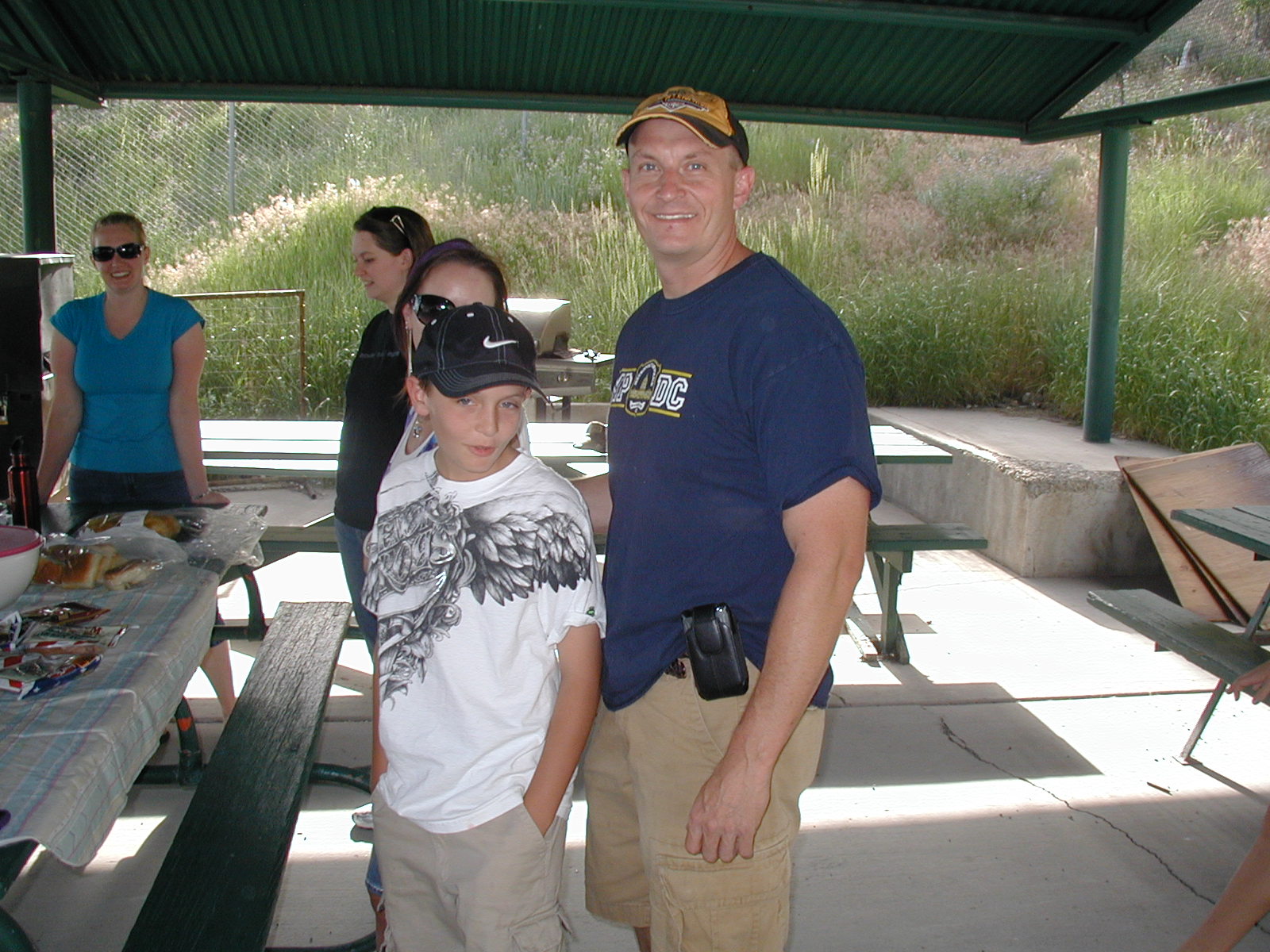
This summer, I had the pleasure of attending a picnic with some fellow writers from AI. Afterward, Lt. Gary Giles from the Orem City, Utah police department, taught us about weapons. He gave us hands on training in shooting, and talked about some of the things every writer should know. For example, Gary pointed out that if your character is firing an automatic pistol, the scene will be littered with shell casings. As opposed to a revolver, which doesn’t eject the shells.

Having grown up around guns, I enjoyed the training from a police officer’s point of view, but many of my peers had never been around a weapons fire. They were able to feel and shoot many different guns and learned a lot. Thanks Gary, for taking the time, and Thanks Nichole, for setting it up.

As a writer, I owe it to my readers to be accurate in my descriptions. Some things just can’t be described without a working knowledge of the place or the experience. Take the time task to a professional. Use the Internet, and learn all you can.

Good luck with your writing—see you next week.